Do you know what Blunt-needle ICSI is?
PIEZO-ICSI (Piezoelectric Intracytoplasmic Sperm Injection) represents a significant evolution in IVF technology, offering a gentler and more precise method for injecting sperm into an egg. While its use of a blunt-ended micropipette is a distinctive feature, it’s the sophisticated application of piezoelectric pulses that truly defines and elevates this technique.
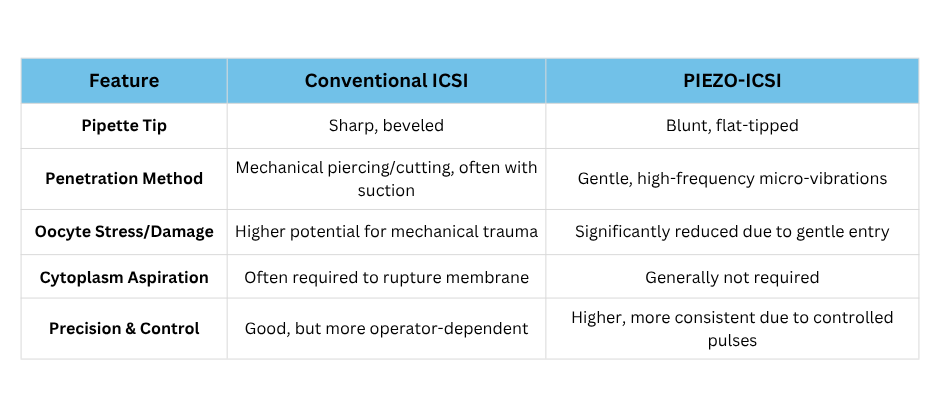
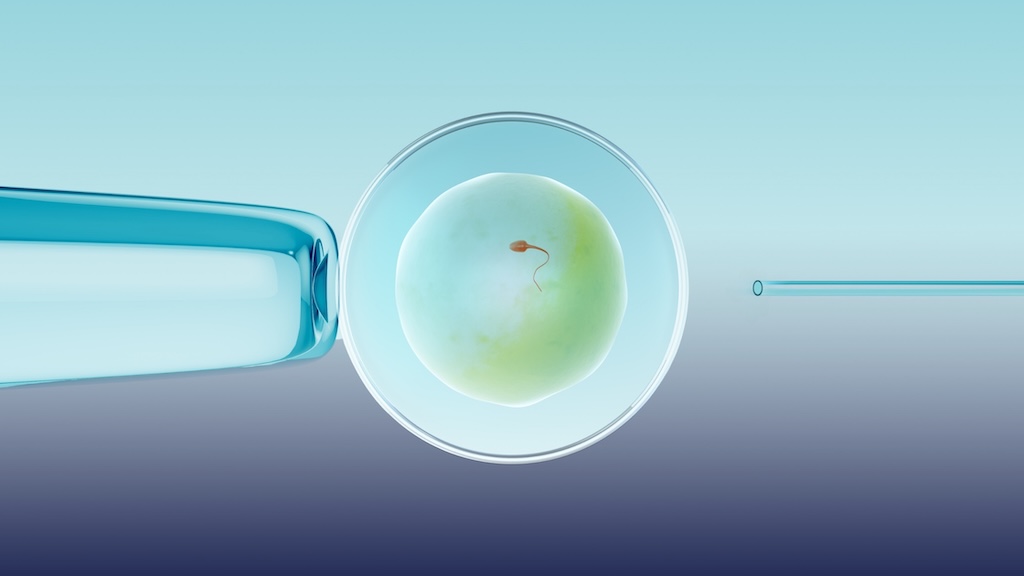
Unlike conventional ICSI, which employs a sharp needle to pierce the egg, PIEZO-ICSI utilizes high-frequency, ultra-fine vibrations. These vibrations, emitted from the blunt tip, allow the pipette to gently “drill” or “vibrate” through the egg’s outer layers with minimal physical force or deformation. This method significantly reduces the risk of cellular damage to the delicate oocyte, leading to lower degeneration rates post-injection.
The synergy between the blunt tip and the precise piezo pulses is key. The bluntness avoids the tearing associated with sharp needles, while the vibrations enable effortless penetration. This results in higher fertilization rates, potentially improved embryo quality, and ultimately, a greater chance of successful implantation and a viable pregnancy. PIEZO-ICSI offers a refined, less invasive approach to a critical step in the IVF process.
- Conventional ICSI: This technique utilizes a sharp, beveled glass micropipette. The embryologist manually pushes this sharp needle through the egg’s outer shell (zona pellucida) and then the egg’s membrane (oolemma), often using slight suction to rupture the membrane, before releasing the sperm. This method relies on mechanical force and the sharpness of the pipette.
- PIEZO-ICSI: In contrast, PIEZO-ICSI employs a blunt-tipped micropipette connected to a piezoelectric device. Instead of a sharp puncture, this device generates rapid, ultra-fine vibrations (pulses). These precise pulses create a small, localized opening in the egg’s membranes, allowing for a gentler, “drilling” or “vibration-assisted” entry of the sperm, typically without needing to aspirate cytoplasm.