
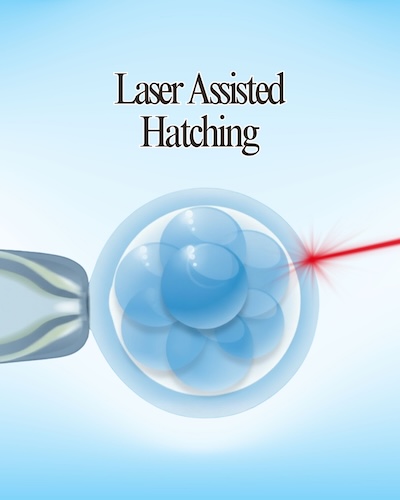
Precise thinning or opening of the zona pellucida (embryo shell) using a non-contact infrared laser system prior to transfer, facilitating embryo emergence and implantation.
The human embryo must “hatch” from its outer shell, the zona pellucida, to implant in the womb. Laser-assisted hatching is a technique that creates a small artificial hole in this zona using a laser. This is believed to facilitate the embryo’s escape, thereby increasing its chances of implantation and pregnancy. This procedure is performed just before embryo transfer, either at the early cleavage (Day 2-3) or blastocyst (Day 5-6) stage.
Why It Matters
Some embryos struggle to hatch naturally due to thickened or hardened zonae—common in frozen-thawed embryos, older maternal age, or prior failed transfers. LAH may improve implantation potential in carefully selected cases by:
- Reducing mechanical barrier to trophoblast contact
- Supporting hatching in vitrified-warmed embryos
- Providing intervention option for recurrent implantation failure
The Alpha Advantage
We apply LAH selectively based on individual embryo assessment and patient history—not as routine add-on. Our laser system allows micron-level precision with zero thermal damage to adjacent cells, and our embryologists document indications transparently in your cycle report.